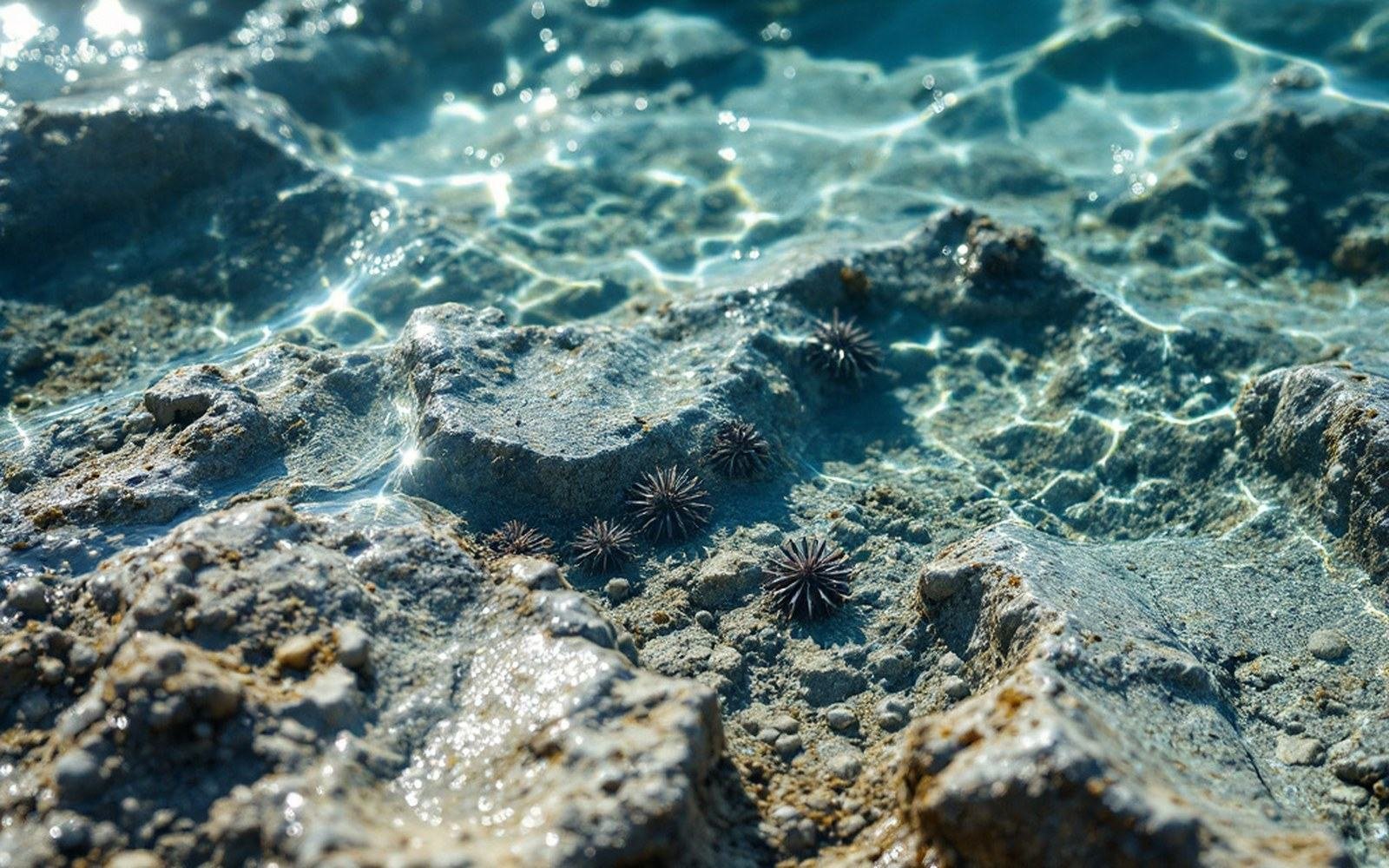
The forest that grows without soil
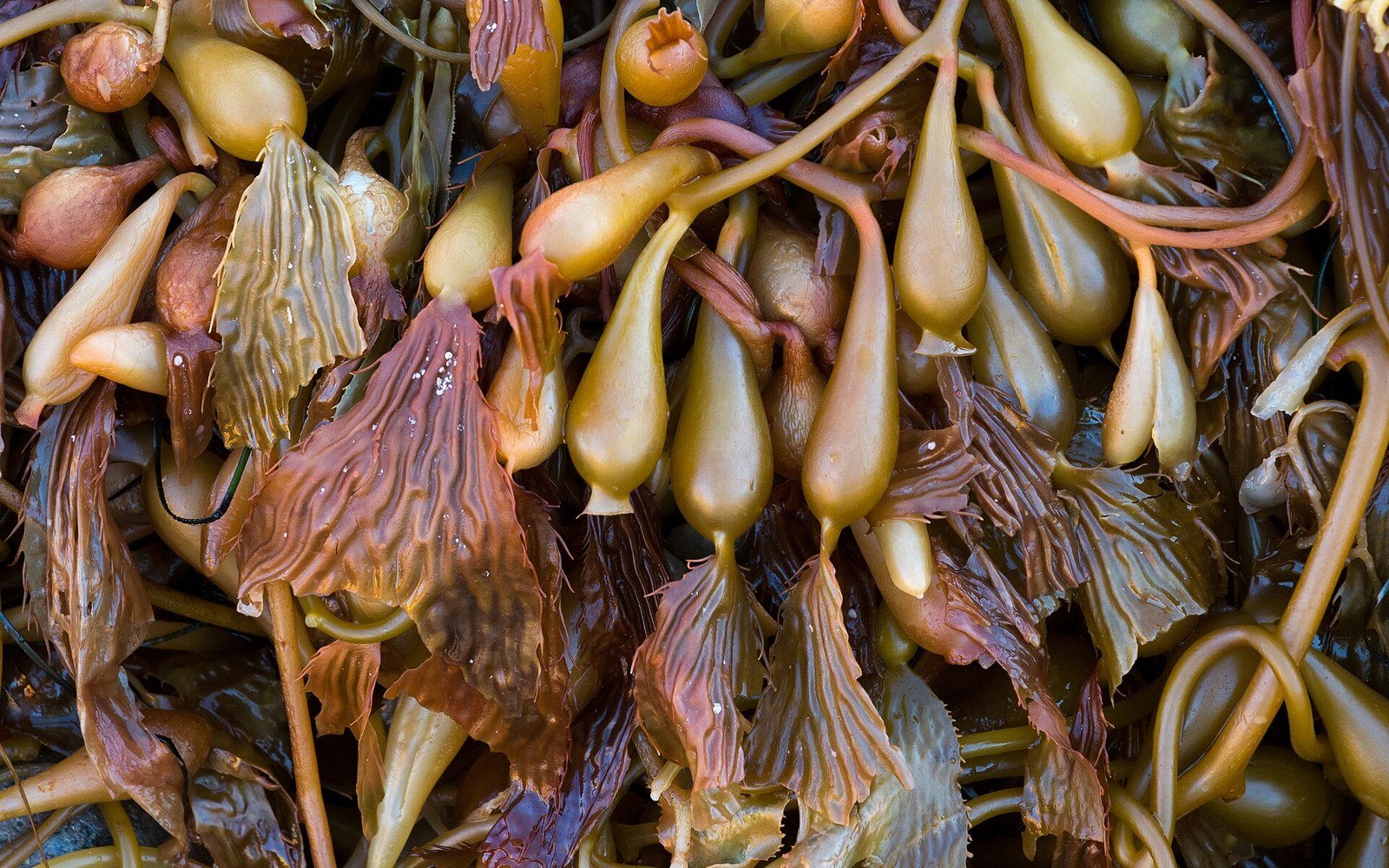
Kelp does not need earth. It anchors to rock with a structure called a holdfast — not a root, which absorbs nothing, but a grip — and then it grows upward through the water column, sometimes eight or ten centimetres a day, reaching canopy heights of thirty metres in productive systems. The resulting structure is a three-dimensional forest: a canopy layer, a mid-water column, a floor receiving filtered light. Fish shoal in the fronds. Invertebrates colonise the stipes. The holdfast itself hosts dozens of species doing nothing that could survive on bare rock. Every function that forest architecture provides on land — shade, shelter, stratified microhabitats — the kelp provides in cold, shallow coastal seas.
That forest is fragile in a specific and well-documented way. Remove one animal and the whole thing collapses to bare substrate. The mechanism is a trophic cascade: a change at the top of a food web that propagates downward through intermediate consumers to primary producers. In kelp systems, the chain is short and brutal. Otters eat sea urchins. Sea urchins eat kelp. The arithmetic is unforgiving.
The sequence, documented
Sea otters (Enhydra lutris) were hunted close to extinction across the North Pacific during the maritime fur trade, which peaked in the eighteenth and early nineteenth centuries. By the time protective legislation arrived, regional populations had been reduced to small remnant groups at scattered locations. What remained of those populations, and what happened when some of them recovered, gave ecologists an accidental experiment running across thousands of kilometres of coastline.
The ecologist James Estes, working from the late 1960s onward, conducted systematic surveys across Aleutian island communities — some with recovering otter populations, some still functionally without them. The contrast was stark. Islands with otters had dense kelp canopy and low urchin densities; islands without otters had high urchin densities and virtually no kelp. Estes and his colleague John Palmisano published these findings in Science in 1974, and the data established the otter–urchin–kelp relationship as the canonical example of a trophic cascade in a marine system.
The mechanism is urchin behaviour as much as urchin numbers. When otter predation pressure is high, sea urchins become cautious, retreating into crevices and feeding on drift kelp — detached material that reaches them. That is a sustainable arrangement; the standing kelp survives. When otter predation is removed, urchin populations grow and urchin behaviour shifts. They move openly across the rock face in what researchers describe as urchin barrens — dense fronts of feeding animals that graze the kelp holdfasts directly. Once the holdfast is destroyed, that individual plant is gone. The urchin front advances.
The shift from kelp forest to urchin barren is not a slow decline; it is a state change. Surveys of transitional zones have recorded the kelp canopy collapsing within two to three years of a local otter population crash. Recovery is slower and conditional: urchins, once numerous and behaviourally uninhibited, maintain the barren state even when their absolute numbers later decline, because their feeding efficiency on bare rock is high. The system can lock into the barren state. Getting it back to forest requires urchin density to drop below a threshold, not merely decline somewhat.
How ecologists measure this transition is worth understanding because the numbers are what make the mechanism real rather than anecdotal.
Measurement in the water column
How ecologists measure this transition is worth understanding because the numbers are what make the mechanism real rather than anecdotal. Transect surveys in kelp systems run a measured line across the substrate, with observers recording kelp stipe density, urchin counts, and species present in quadrats placed at regular intervals along the line. Abundances are expressed per square metre. In healthy Aleutian kelp forest, urchin densities run at fractions of a unit per square metre; in barrens, counts of ten to thirty per square metre have been recorded.
The same transect methodology was applied when, from the 1990s onward, Aleutian otter populations crashed again — this time not from hunting, but from increased predation by killer whales. Estes and colleagues documented the collapse in a 1998 paper in Science, recording otter declines of more than 90 percent at several islands between 1990 and 1997, accompanied by urchin population increases by factors of between two and five, and kelp declines to near-zero cover. The surveys involved timed swims along fixed transects — a method that, while less exact than physical quadrats, allows coverage of the spatial scales involved and produces consistent comparative data across years.
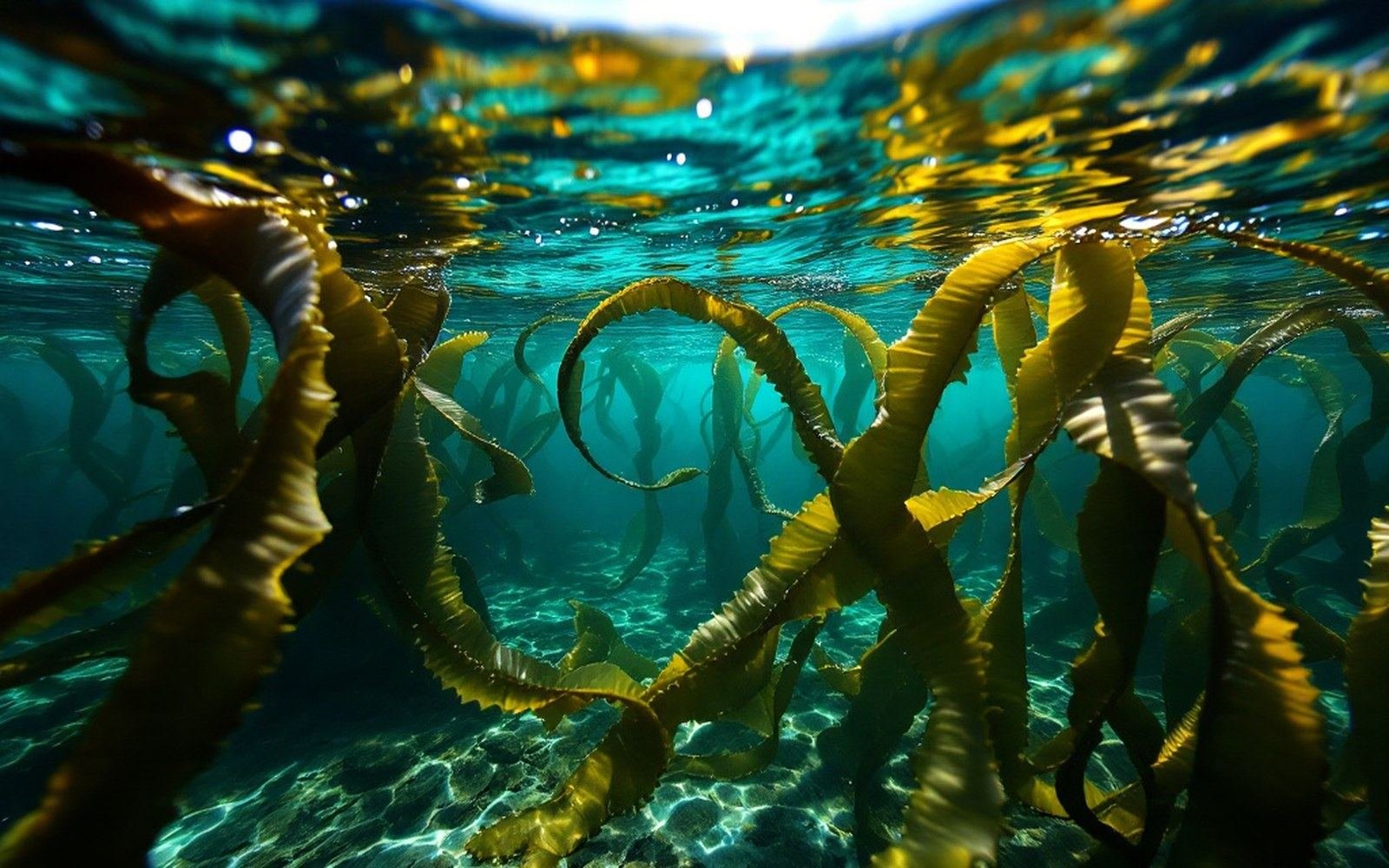
Giant kelp holds its blades near the surface with gas floats and rebuilds the whole canopy each season.
Other researchers working in northern California have extended the picture southward, documenting variation in how fast the transition occurs depending on urchin species, water temperature, and whether drift kelp supply is locally sufficient to sustain urchins in their cautious, crevice-bound mode. The ecology of the kelp forest is not uniform across its range: Macrocystis pyrifera systems off California behave somewhat differently from Nereocystis luetkeana systems in Alaska, and urchin species — principally Strongylocentrotus spp. — vary in their feeding aggression and in how strongly otter predation suppresses them.
What the barren state means for the structure
Urchin barrens are not empty. That needs stating clearly. Coralline algae persist, encrusting the rock surface and giving barrens their characteristic pale pink appearance. Some invertebrate species remain. But the structural complexity is gone. There is no canopy, no mid-water column, no holdfast community. The number of species that the three-dimensional kelp architecture supports — estimates for North Pacific systems run to several hundred — is replaced by the community a flat, algae-crusted rock surface can hold. The loss is architectural as much as it is a loss of any individual species, which is precisely why the trophic cascade concept matters for understanding it: the critical link is not the kelp's own biology but its dependence on the structural relationships above it in the food web.
That dependence runs through a single predator whose feeding rate — a large otter requires roughly twenty-five percent of its body weight in food per day — keeps urchin numbers in the range where their behaviour stays cautious. Measure the otter, and you have measured the forest. The transect data makes that arithmetic visible: a column of numbers recording animals per square metre, plotted over decades, is the biography of a habitat that has no soil, no roots, and no stability without its apex consumer in the water above it.