The Difference Between Living There and Making It
Ecologists draw a distinction that sounds philosophical until you try to map a habitat boundary. Most organisms find an environment and tolerate or exploit what it offers: the wolf moves through the forest, the salmon runs the river, the eagle uses the thermal. A much smaller number of species build the substrate itself — they alter hydrology, deposit mineral skeletons, or physically hold back water and sediment in ways that change the physical environment for every other occupant. The term for this is ecosystem engineering, formalised by Clive Jones and colleagues in a 1994 paper in Oikos that separated "autogenic engineers" (which change the environment via their own physical structure, alive or dead) from "allogenic engineers" (which transform materials and so change physical state). Kelp, coral and beaver are the three most-studied examples, and none of them simply lives in a habitat — each manufactures one.
The practical difference matters for measurement. When a physical ecologist sets out to map a boundary or characterise a zone, habitat built by its occupants shifts in space as the engineer population shifts, and the lag between organism loss and habitat loss can be months or decades, because the structure persists after the builder dies. A dead reef still provides substrate; a drained beaver pond still shows in the soil chemistry and the seed bank for years. Measuring these boundaries therefore means measuring structure, not just organism density, and the instruments are correspondingly varied — sonar bathymetry for kelp canopy, core transects through coral for skeletal accretion rates, LiDAR surveys of beaver pond topography. The boundary is not a line someone drew; it is a physical consequence of biological activity, and it moves when that activity changes.
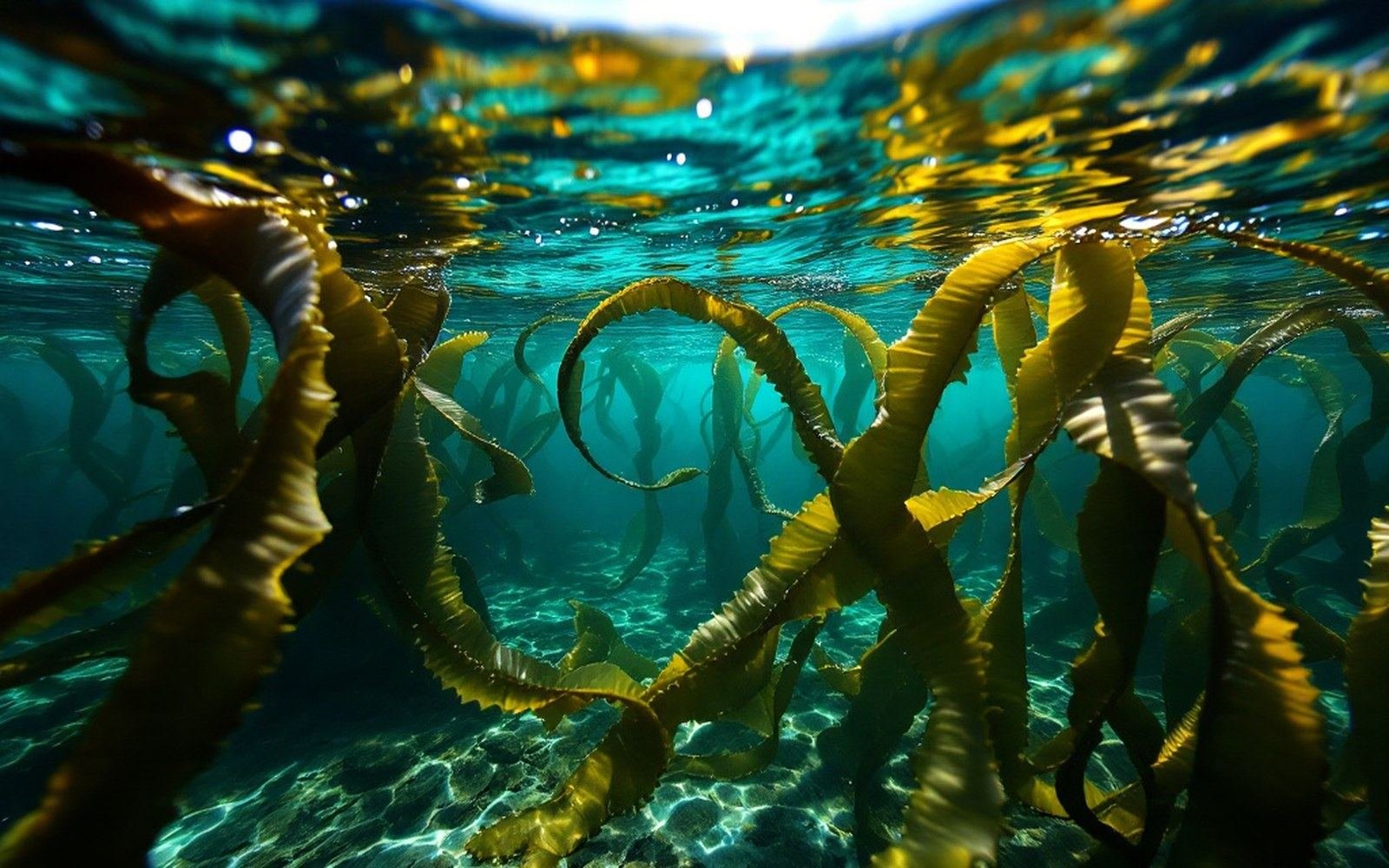
Giant kelp holds its blades near the surface with gas floats and rebuilds the whole canopy each season.
Three Builders, Three Mechanisms
Kelp
Kelp is not a plant. It is a brown alga in the order Laminariales, and the world's largest species — Macrocystis pyrifera — grows at rates of up to thirty centimetres per day, building a canopy that can reach forty metres from a rocky seafloor. That canopy is the habitat. It intercepts light, dampens wave action, and creates a thermal and chemical stratification of the water column that would not exist over bare rock. Inside it, hundreds of invertebrate and fish species sort themselves by depth, light availability and distance from the holdfast. Remove the kelp and that zonation collapses; the physical structure that maintained it is gone. Rocky reef covered by kelp and rocky reef cleared of it share the same geology and the same depth, but the species assemblages are almost entirely different.
The engineer relationship is also vulnerable to trophic cascade: where sea otters are absent, sea urchin populations can reach densities that graze kelp holdfasts faster than they can regenerate. The resulting "urchin barrens" are the same substrate, same temperature, same water, minus the biological structure — a demonstration that the habitat is the organism, not the location.
Coral
Reef-building (scleractinian) corals are the most architecturally complex engineers in the ocean. Each polyp secretes a calcium carbonate exoskeleton; colonies of billions do this over centuries and produce structures measurable in kilometres and metres of vertical relief. The Great Barrier Reef extends over two thousand kilometres along the Queensland coast and reaches depths of over one hundred metres in places, much of it skeleton that accumulated over millions of years. The living coral veneer is geologically thin — typically the top few centimetres of a structure whose bulk is the accumulated skeletons of past generations. The reef persists long after any given polyp dies; the structural habitat is the product of geological time, not just present biological activity.
Accretion rate is the measurement that tells you whether the engineer is keeping pace with its own requirements. Tropical reef corals typically accrete between one and twenty-five millimetres of calcium carbonate per year, depending on species and temperature. When bleaching episodes kill the living layer, accretion stops; bioerosion by boring sponges, worms and parrotfish continues. Net negative accretion means the habitat is shrinking even when the water still contains the right nutrients for coral larvae. This is why reef monitoring programs measure skeletal density from core samples rather than just counting living colonies — the structure, not the organism count, is the habitat variable.
The organism and the habitat are the same thing, and tracking one means tracking the other.
Cold-water coral operates by the same mechanism with no photosynthetic partnership and no depth limit imposed by light. Lophelia pertusa and related species build framestone reef at depths from two hundred to a thousand metres, in near-freezing water and complete darkness, and the reef structures at sites like Røst Bank off the Norwegian coast are hundreds of metres across and many metres tall — biological architecture invisible to sunlight but real and structurally complex enough to support their own depth-sorted communities.
Beaver
Castor fiber in Eurasia and Castor canadensis in North America are the only mammals with a documented landscape-scale engineering effect comparable to reef construction. A beaver dam, built from felled timber, branches, mud and stones, impounds water. The pond that forms raises the water table, saturates surrounding soils, converts running-water to standing-water habitat, deposits sediment, and — over years — builds up a peat-rich substrate that persists as wetland long after the dam fails or the beavers move on. The dam as a landform rewrites the hydrology of an entire stream reach, and the downstream effects on sediment transport are measurable kilometres from the structure.
The mechanism that makes beavers engineers rather than simply inhabitants is gnawing. By felling trees specifically to construct and maintain a dam, the beaver actively transforms allogenic material into a physical structure it then occupies. No other rodent does anything at this spatial scale. In the Scandes — the mountain ranges running through Norway and Sweden — reintroduced beavers are measurably changing the distribution of riparian wetland within a few years of establishment, a pace of habitat creation unusual even by engineering standards.
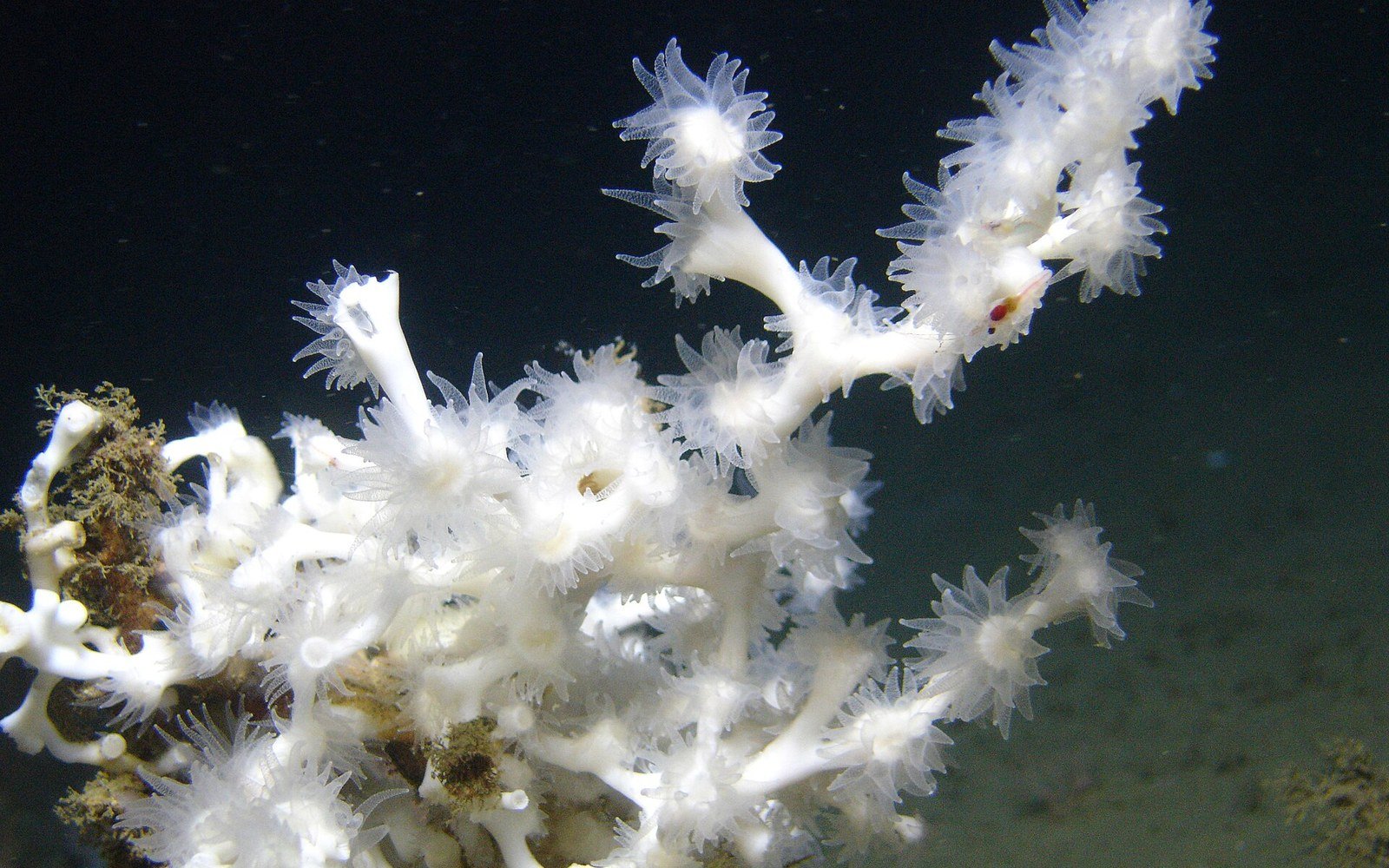
The polyps are millimetres across, but the structure they leave behind is metres tall, and none of it needs light. See: Røst, and a reef with no light
Photo: Lophelia pertusa NOAA · Wikimedia Commons
Measuring What Was Made
Identifying an engineer habitat in the field requires separating the organism from its product, and that is not always obvious in real time. A quadrat laid over living coral and one laid over reef rubble in the same location return very different species lists, but the rubble quadrat is still measuring an engineer habitat — just a degraded one. Similarly, a transect across a kelp bed and across adjacent urchin barrens will record very different canopy structure, yet the underlying rock is identical; the variable being measured is the engineer's output, not the geology.
This is the conceptual shift that built-habitat demands of field biogeography: the boundary is not between substrate types or between climatic zones — it is between places where the engineering is active and places where it has failed or been removed. The measurement tools are physical as much as biological: sonar for kelp canopy volume, core drilling for coral accretion, LiDAR for pond bathymetry. The organism and the habitat are the same thing, and tracking one means tracking the other.